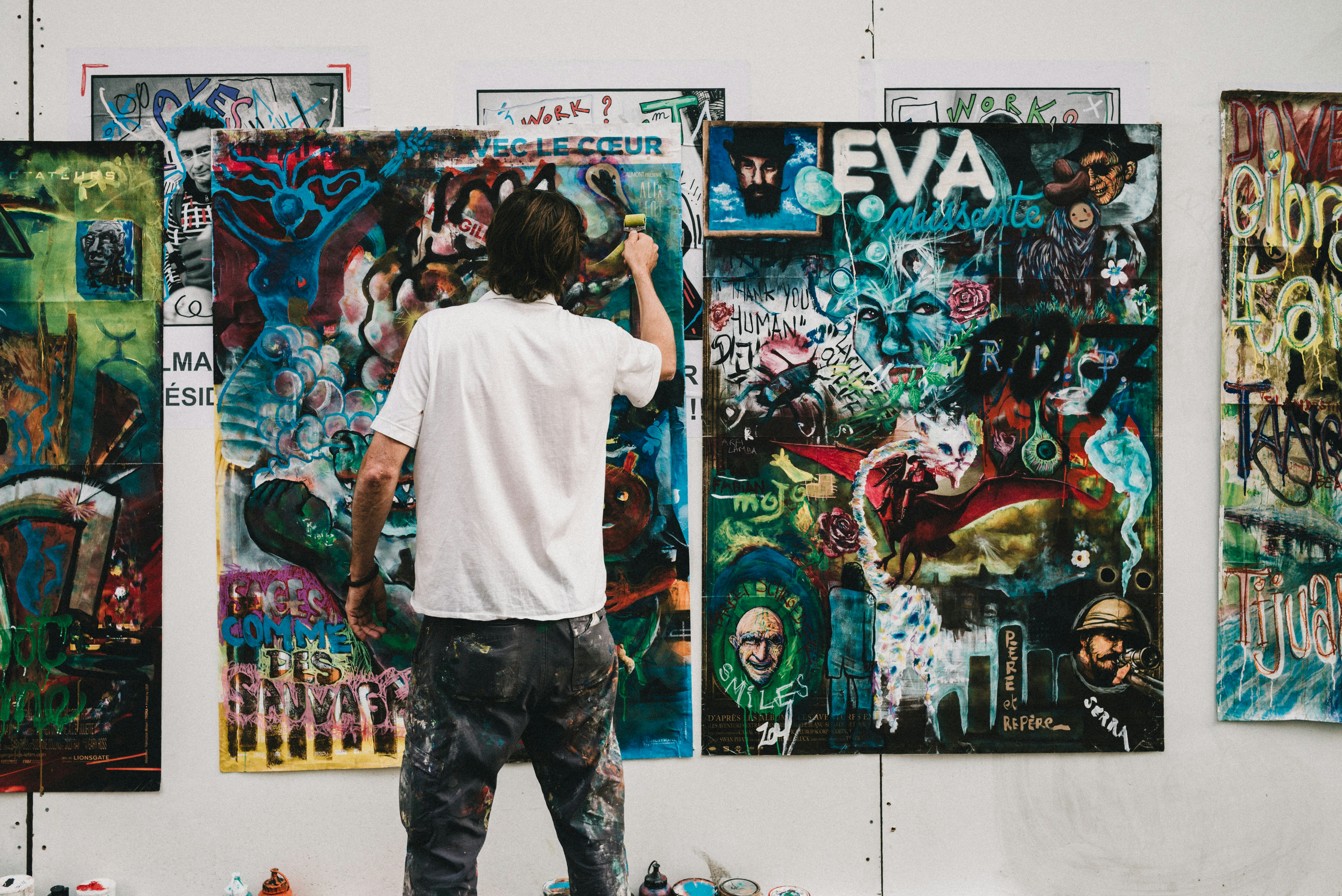
The term "artist" often conjures a specific image: a painter before an easel, a sculptor shaping clay, or perhaps a graphic designer crafting a captivating visual. While these interpretations are certainly valid, they represent only a fraction of the expansive and dynamic reality of what it means to be an artist today. In everyday speech and academic discourse, the focus frequently narrows to the visual arts. However, a deeper exploration reveals that the definition of an artist stretches far beyond the canvas, embracing a multitude of mediums and expressions that enrich human culture in profound ways.
The Evolving Definition of an Artist: From Latin Roots to Modern Interpretation
Understanding the modern artist requires a brief journey through history. The term “artist” originates from the Latin word ars, meaning “skill” or “craft,” and it made its way into English usage around the 1580s. Initially, it served to distinguish creators of “fine arts”—works valued for their aesthetic or intellectual merit—from mere “craftsmen” who produced utilitarian objects. This distinction, though blurred in contemporary discourse, laid the groundwork for how we perceive artistic endeavor today.
Lexical definitions in contemporary English dictionaries consistently highlight skill, imagination, and the creation of aesthetic or expressive value. The Cambridge English Dictionary, for instance, primarily defines an artist as "a person who paints, draws, or makes sculptures," but extends this to include performers such as actors, musicians, or dancers. Similarly, the Oxford Learner's Dictionary emphasizes "a person who creates works of art, especially paintings or drawings," encompassing imaginative creation across various visual media, including graphic design.
Further elaborating, the American Heritage Dictionary describes an artist as "one, such as a painter, sculptor, or writer, who is able by virtue of imagination and talent or skill to create works of aesthetic value, especially in the fine arts," drawing a clear contrast with an artisan focused on practical output. The Collins English Dictionary even broadens the scope to "a person who does anything very well, with imagination and skill," reflecting a colloquial usage that extends beyond traditional arts, as seen in phrases like "con artist." Despite these subtle variations, the core elements remain consistent: creativity, skill, and the intention to create something of value beyond mere utility.
Beyond the Canvas: Artists in Diverse Mediums
The widespread perception of an artist being solely a visual practitioner often overshadows the vast landscape of creative expression. While visual artists – painters, sculptors, illustrators, photographers, and graphic designers – remain central to the definition, the term equally embraces creators across numerous other disciplines:
- Performing Arts: This category is a vibrant testament to the transient, living nature of art. Actors, musicians, singers, dancers, and stage performers are artists who use their bodies, voices, and instruments to evoke emotion, tell stories, and challenge perceptions in real-time. Their medium is the moment, their canvas the stage, and their creation an experience that unfolds and dissipates, leaving a lasting impression. The historical use of the French word artiste in English, though now considered old-fashioned, once specifically referred to these performers, underscoring their vital role.
- Literary Arts: While "author" is the more common term, writers, poets, playwrights, and novelists are undeniably artists. They craft worlds, characters, and ideas using language as their medium. Through the careful selection of words, rhythm, and narrative structure, they create works of profound aesthetic and intellectual value. A critic’s review might describe a novelist as a wordsmithing artist, acknowledging their imaginative skill in constructing a literary masterpiece.
- Digital Arts: In the 21st century, technology has opened up entirely new realms for artistic expression. Digital artists create intricate animations, immersive video games, virtual reality experiences, interactive installations, and digital soundscapes. Their tools may be code and pixels, but their process involves the same imaginative vision, technical skill, and intentional expression as any traditional artist.
- Conceptual and Interdisciplinary Arts: Some artists deliberately challenge traditional boundaries, creating works where the idea or concept is paramount. Performance art, installations, and land art often blend elements from visual, performing, and even scientific disciplines, pushing the very limits of what "art" can be.
The diversity of mediums highlights that the essence of being an artist lies not in the material used, but in the creative process itself.
What Truly Defines an Artist? Skill, Vision, and Intentional Expression
Beyond the medium, what truly unifies all artists is a combination of core attributes: the application of technical skill, imaginative vision, and intentional expression. These three pillars form the bedrock of artistic creation:
- Technical Skill: An artist typically possesses a mastery of their chosen tools, techniques, and medium. Whether it's the precise brushwork of a painter, the nuanced vocal control of a singer, the intricate narrative structure of a writer, or the complex coding of a digital animator, skill allows the artist to translate their internal vision into an external reality. This isn't merely craftsmanship; it's the cultivated expertise that enables precise communication and powerful impact.
- Imaginative Vision: This is the unique perspective an artist brings to the world. It’s the ability to see beyond the ordinary, to conceive something entirely new, or to interpret reality in a fresh, compelling way. An artist's vision allows them to infuse their work with originality, challenging norms and offering new insights. This imaginative drive is often linked in psychological research to traits like high openness to experience, emotional sensitivity, and nonconformity, though these traits aren't universally predictive of success or mental health outcomes.
- Intentional Expression: Art is rarely accidental. An artist deliberately creates to communicate ideas, evoke emotions, tell a story, or explore a concept. There is a conscious purpose behind the act of creation, a desire to convey something meaningful to an audience. This intentionality transforms raw skill and imaginative ideas into a coherent, impactful work of art.
Historically, artists have been cultural innovators, driving evolution by challenging norms and forging new forms of expression. From ancient sculptors preserving mythological narratives to modern creators using digital tools for social commentary, artists continuously redefine our understanding of the world. To learn more about these crucial elements, you might find valuable insights in What Makes an Artist? Skill, Vision, and Cultural Impact.
The Indeterminate Nature of Art and the Artist's Identity
Despite centuries of discourse, there remains no universally agreed-upon definition of art itself. This fundamental indeterminacy naturally makes the definition of who is and is not an artist equally fluid. Artists and philosophers continue to debate what counts as art, often influenced by institutional preferences, subjective interpretations, or ideological alignments rather than purely objective skill or impact. This ongoing debate highlights that the identity of an artist is less a fixed label and more an ongoing journey.
Indeed, many believe that "an artist is a process," not merely a static title. The act of creating, questioning, learning, and evolving is central to the artistic identity. It's a continuous engagement with one's chosen medium, vision, and expressive drive. Exploring this concept further can deepen your understanding; consider reading An Artist Is a Process: Unpacking the Creative Identity.
Tips for Embracing the Artist Within (and Recognizing It in Others)
- Broaden Your Perspective: Don't limit your definition of an artist to visual creators. Appreciate the artistry in a perfectly composed piece of music, a gripping novel, a powerful dance performance, or an innovative digital experience.
- Focus on Intent and Skill: Look for the deliberate application of skill and imaginative vision. Is the creator trying to communicate something, evoke an emotion, or challenge a perspective?
- Embrace the Process: Understand that being an artist is a journey of continuous learning and creation. For aspiring artists, this means consistent practice, observation, and introspection. Don't fear experimentation or the evolution of your craft.
- Value Originality: While inspiration is important, true artistry often lies in developing a unique voice and perspective.
Conclusion
The definition of an artist is far richer and more encompassing than common usage often suggests. From the ancient Latin roots of ars, denoting skill, to the vast contemporary landscape of visual, performing, literary, and digital arts, an artist is fundamentally a person who creates original works through the application of technical skill, imaginative vision, and intentional expression. Whether wielding a paintbrush, a musical instrument, a pen, or lines of code, artists across diverse mediums share a common thread: the unique human impulse to conceive, craft, and communicate meaning. Their work not only enriches our individual lives but collectively shapes our cultural narratives, pushing boundaries and inspiring new ways of seeing and understanding the world.